PageScope — Examples across the web
See examples of PageScope summarizing articles, videos, travel pages, books, and museum objects using public sources.
A long article, in key points
The overview, the key points, and an extra note card — a long article condensed to what matters.
An encyclopedia overview of black holes — what they are, how they form, how we detect them, and what is still unresolved.
What it is — A black hole is a region of spacetime where gravity is strong enough that nothing inside the event horizon can escape, not even light.
How they form — Stellar-mass black holes form when a massive star exhausts its fuel and its core collapses; supermassive ones, millions to billions of solar masses, sit at the centers of most large galaxies.
How we know — They are inferred from their effect on surroundings: stars orbiting an invisible mass, superheated accretion disks, and the 2019 Event Horizon Telescope image of M87*.
Still open — How information behaves at the horizon, and how gravity reconciles with quantum mechanics inside, remain unresolved.
A whole video — transcript and comments
PageScope reads the real transcript, not just the description, and can summarize the comments too. Every timestamp jumps straight into the video.
🔢 The setup — Builds intuition for neural networks using handwritten-digit recognition as the running example 0:30.
🧠 Neurons and layers — A neuron just holds an activation between 0 and 1; the first layer is the 784 input pixels and the last is the ten digit scores, with hidden layers in between 1:30.
🪜 What we hope happens — Ideally the middle layers learn small edges, then loops and lines, then whole digits 5:50.
⚖️ Weights, bias, sigmoid — Each connection carries a weight; a weighted sum plus a bias is squished into 0–1 by the sigmoid, deciding whether a neuron fires 8:35.
Ask a travel page, get a plan
It turns a park-planning page into practical answers, with each source a click away.
Yes — Yosemite can work well as a first-time day trip, especially if you focus on Yosemite Valley and a few major viewpoints rather than trying to see the whole park. The park itself even points visitors to trip-planning help for “visiting Yosemite in one day” and recommends arriving before 9 am or after 5 pm to avoid the worst congestion [1].
No — Yosemite does not require a reservation just to enter in 2026, but you still need to pay the entrance fee or use a valid park pass. The park also strongly recommends reservations for things like lodging, camping, and backpacking [1].
Expect at least the entrance fee, and if you stay overnight, add lodging or campground costs; Yosemite says the entrance fee still applies even though no entry reservation is required. Campgrounds shown on official booking pages are often around $24 to $36 per night, with Camp 4 at $10 per person per night [2].
If you’re only doing a day trip, your main costs are usually park entry, gas, food, and possibly parking-related time/traffic costs rather than reservations [3].
If Yosemite Valley parking is full, cars may be turned around near El Capitan and redirected out of the Valley or to other areas with limited parking. The park recommends arriving before 8 am, parking once, and then getting around by walking, biking, or the free shuttle [4].
Clickable sources are currently a Perplexity feature.
Highlight a passage from a book
Select a line and summarize, explain, or translate it in place — no copy-paste, no leaving the page.
It is a truth universally acknowledged, that a single man in possession of a good fortune...
Austen opens with a joke wearing formal clothes: the sentence sounds like a universal law, but it is really mocking how quickly polite society turns a wealthy single man into marriage material.
Custom prompts for different sites
Save prompts for the sites you read often, attach context when it helps, then ask with the right model and tone already in place.

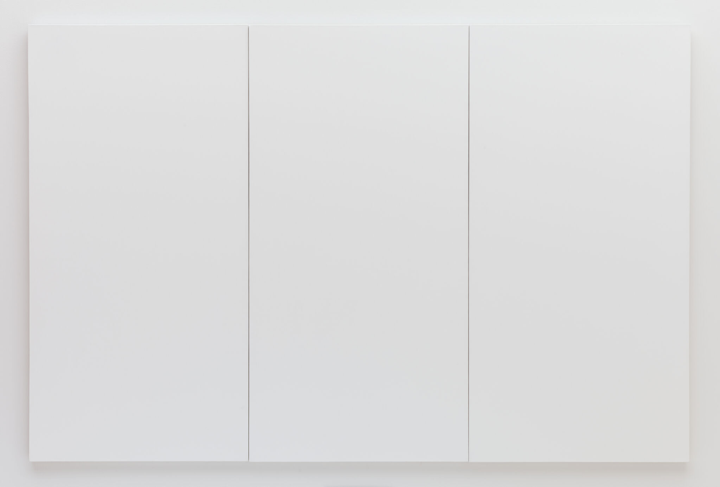
Explain the work in plain language, point out what to notice first, and give me one relaxed conversation angle.
 gallery-wall.pngScreenshot · PNG
Help me talk about this without sounding pretentious.
A simple way to say it: this is a painting that makes you notice the room around it. Because the panels are so plain, small changes in light, shadow, and where you stand become part of the work.
Conversation angle — Instead of asking "what is it supposed to be?", ask what changes as you keep looking. The point is less image-hunting and more attention-training.
Try it on whatever you read next.
Connect the AI service you already use, then ask about any page, PDF, or video with the source context included.